• Home
  • Education
  • News and Resources
  • Advocacy
  • Associate Members
  • Contact
  • Click to open the search input field Click to open the search input field Search
  • Menu Menu

Tag Archive for: Economy

Posts

WBA Wisconsin Economic Report banner
News

Wisconsin Banks Strong Heading into 2022

Rose Oswald Poels

Banks well-positioned to help customers navigate any economic headwinds

By Rose Oswald Poels, WBA President and CEO

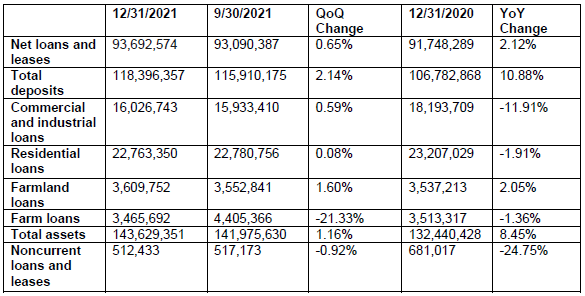
As we continue to navigate the evolving health pandemic heading into 2022, Wisconsin banks are well-positioned to serve the varying needs of their customers and communities. Through the third quarter of 2021, Wisconsin’s 176 headquartered banks are financially strong with continued high levels of liquidity that will allow them to meet their customers’ various borrowing needs.

The continued resiliency of the industry was evident in the Federal Deposit Insurance Corporation’s (FDIC) third quarter numbers. Nearly all of the industry is profitable and more than 72% of Wisconsin banks saw earnings gains and good credit quality through the third quarter of 2021. Wisconsin banks also saw a slight increase in net loans in the third quarter compared to the prior quarter, led largely by residential real estate lending; however, on a year-over-year (YoY) basis, lending was down 2.44%.

Overall, loan demand throughout last year was weak, and I expect that to continue for at least the first six months of 2022 and perhaps longer. Commercial loan demand was particularly low as Wisconsin banks saw a more than 23% decline in commercial and industrial loan portfolios in the third quarter of 2021 compared to the same quarter the prior year. This is largely attributed to factors, such as workforce shortages and supply chain issues, that will persist into 2022. These two factors alone have stunted growth in the business sector as many retail businesses are forced to alter their hours of operation and manufacturers to cut back production, all of which results in lower loan demand. In addition, many of these businesses received one or more forms of government stimulus or low-cost emergency loans, resulting in lower demand for traditional loans from banks as their balance sheets remained financially healthy.

The agricultural sector is expected to have a growth in profitability in the coming year in part to having received government stimulus or low-cost emergency loans over the last few years as well as having experienced a strong year last year. Farmland loans remained at nearly the same levels in the third quarter of 2021 compared to both the prior quarter and the same period in the previous year. Farm loans rose by 3.26% compared to the prior quarter but were down 7.83% compared to the third quarter in 2020. According to the national Fall 2021 Agricultural Lender Survey produced jointly by the American Bankers Association and Farmer Mac, agricultural lenders expect 70% of their borrowers to be profitable through 2022.

Wisconsin banks continue to be a safe place for consumers to keep their money, as evidenced by a 10.42% YoY climb in deposits from the third quarter of 2020 compared to the third quarter of 2021. I expect these deposit balances to remain high as economic headwinds in 2022, notably inflation and the Omicron variant of COVID-19, will likely cause stock market fluctuations that often make investors nervous.

Despite these economic challenges, I expect the Federal Reserve to raise interest rates only once during 2022, which will impact the banking industry’s profitability. With continued weak overall loan demand and the prolonged low interest rate environment putting pressure on the net interest margin of Wisconsin banks, 2022 could be a more difficult year for the banking industry. Nonetheless, with the industry’s strong financial condition, banks are positioned well to weather the upcoming year.

—

Founded in 1892, the Wisconsin Bankers Association (WBA) is the state’s largest financial industry trade association, representing more than 200 commercial banks and savings institutions and over 21,000 employees.

The Association represents banks of all sizes from banks in rural Wisconsin to the state’s largest financial institution in Green Bay, and nearly 98 percent of banks in the state are WBA members.

January 3, 2022/by Hannah Flanders
https://www.wisbank.com/wp-content/uploads/2021/12/wi-economic-report-banner.png 453 1484 Hannah Flanders https://www.wisbank.com/wp-content/uploads/2021/09/Wisconsin-Bankers-Association-logo.svg Hannah Flanders2022-01-03 03:34:132022-01-03 21:42:51Wisconsin Banks Strong Heading into 2022
WBA Wisconsin Economic Report banner
News

Tech Will Help Drive Economy in Unpredictable Year

By Tom Still, WTC President

The list of economic uncertainties for 2022 is long and complex, with COVID-19 variants, supply chain woes, energy disruptions, climate-change anxieties, and political frictions around the world producing jittery markets.

It’s time to look for trends in technology to calm frazzled nerves on Wall Street as well as Wisconsin’s Main Streets.

Analysts at International Data Corp., the global market intelligence firm, predict the technology industry is on track to exceed $5.3 trillion in 2022 — thus returning to the 5% to 6% annual growth rate typical before the pandemic. The United States is the world’s largest tech market, representing about a third of the projected total at $1.8 trillion.

Tech overcame the 2020 speed bump precisely because COVID-19 triggered so much change. The workplaces of today are no longer easily defined. Changes in business travel forced innovation. Cybersecurity threats led to more investment across industry lines, from financial services to “Mom and Pop” retailers. Phrases such as “quantum computing,” “virtual reality,” and “artificial intelligence” were once the exclusive lingo of computer scientists; today, they’re part of the business plans for many companies.

It all points to bigger tech budgets, greater investment and more innovation pushing through the economic super-structure.

Technology will continue to disrupt many verticals. Health care is being transformed through telemedicine and wearables, not to mention breakthroughs in diagnostics and therapeutics. The jury is out on how effective remote learning has been for students of all ages, but online education will continue to have a role in the classroom. Sales through eCommerce in the United States continue to soar (hence, some of today’s supply chain troubles) and trends such as cryptocurrency are altering the financial world.

Tech can help slow climate change effects through conservation controls in homes, offices, cities, and power plants, even if “crypto-mining” has become an energy vampire. Likewise, as technology displaces many people in the workforce, it will create more new jobs than it destroys. The trick is ensuring that people are trained to do the work and opportunities don’t bypass women and minorities.

There are some threats to U.S. tech sectors, but also opportunities for Wisconsin to grow as a tech-savvy state.

In Washington, D.C., Congress should establish data privacy rules that are national in scope versus a state-by-state approach that could hamper companies engaged in eCommerce, finance, or insurance. Congress should avoid unnecessary taxes on venture capital managers and not pass an antitrust bill that would shut down “exit” options for young companies.

Congressional consensus around bipartisan plans to invest federal dollars in key research areas could help Wisconsin, especially if the state’s research universities and private partners can compete for one or more R&D “hubs” envisioned through the National Science Foundation.

In the Wisconsin Legislature, the refining of the state’s investor tax-credit law will lead to more angel and venture capital dollars flowing into young companies. When the Qualified New Business Venture law took effect in 2005, angel and venture capital investments could be measured in the tens of millions of dollars. The 2021 total will easily exceed $500 million, in part because those credits are pulling four times their weight in private investment. Pending bills would improve the law.

The new year may be tumultuous in many ways, but growth in tech markets could help smooth choppy waters.

—

The Wisconsin Technology Council is the independent, non-partisan science and technology advisor to the governor and the Legislature.

January 1, 2022/by Hannah Flanders
https://www.wisbank.com/wp-content/uploads/2021/12/wi-economic-report-banner.png 453 1484 Hannah Flanders https://www.wisbank.com/wp-content/uploads/2021/09/Wisconsin-Bankers-Association-logo.svg Hannah Flanders2022-01-01 21:55:102022-01-03 21:55:16Tech Will Help Drive Economy in Unpredictable Year
WBA Wisconsin Economic Report banner
News

Wisconsin Housing Market Remains Strong in 2021 Even as Inventory Tightens

By Michael Theo, WRA President and CEO

With insights from Dave Clark, economist with Marquette University

After a very short two-month recession in March and April of 2020 that mirrored the pandemic-induced economic lockdowns, the U.S. economy bounced back and grew in the second half of the year. Aggressive actions by the Federal Reserve combined with significant stimulus spending approved by Congress led to strong growth in the first half of 2021, with real (inflation adjusted) GDP up by just over 6% for each of the first two quarters of the year.  But growth weakened significantly in the 3rd quarter, and real GDP growth came in at just 2%.  So why has economic growth slipped?  The short answer is that there are significant headwinds on the supply side of the economy that hampered growth including disruptions to supply chains, ongoing labor shortages and rising energy prices. The stimulus spending combined with loose monetary policy has put a lot of money into the economy, but without adequate supply, the economy is growing well below its potential. And for the first time in decades, inflation has become a serious problem. The annual inflation rate was below 2% for the first two months of 2021, but it began to grow in March.  Since May it has been at or above 5% and it grew to 6.2% in October, a level not seen since November of 1990.  Although the Fed suggested earlier in the year that inflation was likely to be transitory, and price pressures would subside once the supply chain improved, inflation thus far has been a persistent and growing problem. Fed Chairman Jerome Powell indicated in late November that the Fed may need to reconsider its easy money strategy to tamp down inflationary pressures.

The state housing market has seen strong demand for a number of reasons. First, there is significant pent-up demand as Millennials are finally buying homes. Second, the state has seen solid job growth over the previous year and statewide labor market that is now effectively at full employment with the state unemployment rate falling to 3.2% in October. Finally, mortgage rates have remained in the neighborhood of 3% all year, which is very low by historical standards. The problem is that supply has not kept up with demand. A balanced housing market is one that has six months of available supply, and the state has been well below that benchmark for nearly four years. Inventories in 2021 never rose above 3.4 months of supply, which signals a very strong seller’s advantage in the market. Strong demand combined with weak supply is a recipe for stagnate sales growth and sharply increasing home prices, which is exactly what we have seen this year. Through the first 10 months of 2021, median prices rose 9.5% compared to that same period in 2020, but sales are essentially even with last year. It is important to point out that we are keeping pace with the record sales of last year so 2021 will still be a very good year for home sales. But unless inventories improve, sales in 2021 we are unlikely to surpass the record home sales from last year.

Looking ahead to 2022, the Fed needs to tread carefully. Increasing short run interest rates will lower inflationary pressures, but if it is too aggressive, the strategy runs the risk of slowing economic growth.  However, inflation lowers consumer purchasing power, and since consumption is approximately two thirds of real GDP, inflation can slow growth in the overall economy. Indeed, the Conference Board’s Consumer Confidence Index fell in November due in part to inflationary concerns. We believe the Fed will find the right balance to lower inflationary risks without increasing the risk of recession in 2022.

The state housing market is likely to see another solid year for sales in 2022. Although rising prices have dampened demand slightly, demand conditions are expected to remain favorable with ongoing job growth and continued household formation by Millennials. Mortgage rates will likely increase modestly but they will remain low by historical standards. The state should see some modest improvement in home inventories as Baby Boomers increasingly transition out of owner-occupied housing and new construction continues to increase. However, the housing market will still be a seller’s market in 2022. Finally, home prices pressures have been moderating since late summer, and we expect that moderation to continue. We are unlikely to see double-digit price increases in 2022.

Policymakers at the national level should avoid passing spending bills that overstimulate the economy and increase inflation, and the Biden administration would be well advised to revisit its energy policy to further mitigate inflationary risks. At the state and local level, easing regulatory pressures on new construction can also help to improve the supply of housing in the state and reduce price pressures for buyers.

—

Founded in 1909, the Wisconsin REALTORS® Association (WRA) is one of the largest trade associations in Wisconsin. It represents and provides services to more than 15,000 members statewide. WRA’s goal is to promote the advancement of real estate in Wisconsin and provide cutting-edge tools to help REALTORS® enjoy a successful career and be competitive in their market.

January 1, 2022/by Hannah Flanders
https://www.wisbank.com/wp-content/uploads/2021/12/wi-economic-report-banner.png 453 1484 Hannah Flanders https://www.wisbank.com/wp-content/uploads/2021/09/Wisconsin-Bankers-Association-logo.svg Hannah Flanders2022-01-01 21:54:072022-01-07 15:18:00Wisconsin Housing Market Remains Strong in 2021 Even as Inventory Tightens
WBA Wisconsin Economic Report banner
News

COVID Made the Economy Sick, Government Made It Worse

By Kurt R. Bauer, WMC President and CEO

Last year in this annual forecast, I predicted that the COVID-19 vaccines would ease the stranglehold the virus had on the economy. I also predicted that then President-elect Joe Biden would govern to the political and economic left of Barack Obama. I think both predictions have largely came to pass. But even with the vaccines, boosters, and therapeutics, COVID-19 will still cast a foreboding dark cloud over the economy in the New Year, as will the Biden Administration’s policies.

There is a cause and effect for everything. COVID-19 caused state governments to order the first ever large-scale shut down of huge swaths of the U.S. economy. That caused a recession and businesses responded by cancelling orders for goods and services that ultimately impacted critical links in the U.S. and global supply chain.

At the same time, the federal government was passing massive, multi-trillion dollar COVID relief packages that stimulated consumer demand for just about everything once the worst of the pandemic appeared to be over. But the damage had been done.

Plants throughout the world that make the things we want — from cars to refrigerators — or make the things that go into the things we want — from microchips to steel — had slowed or idled production. Resuming pre-COVID production levels to meet the sky-high demand isn’t as easy as flipping a switch. And even if factories could keep up with demand, the transportation system that delivers those goods to market couldn’t. That includes shipping, rail, and trucking.

It’s like what happens when there is a car crash on a busy multi-lane highway during rush hour. Traffic slows to a trickle while the accident is cleared. And even after all lanes are reopened, it takes time for normal flow to resume. COVID is the car crash. The highway is our economy. And traffic is the supply chain.

Two other major “effects” caused by the pandemic are workforce shortages and inflation.

On workforce, far fewer Americans, including Wisconsinites, are working today than pre-COVID. Some of the federal stimulus is to blame, especially the American Rescue Plan passed last spring when the economy was already on the mend. Incentives matter and when you pay people not to work by supplementing state unemployment benefits, don’t be surprised when some don’t. The good news is that job numbers from late last year appear to show people returning to work, albeit slowly.

And all the trillions of dollars in federal stimulus compounded by more demand for goods than supply is causing inflation, and it doesn’t appear to be “transitory.” For example, wage inflation is certainly not temporary. Wages and benefits are rising because of the labor shortage and, unlike the price of groceries, the cost of hiring is unlikely to drop. We are setting new baselines.

Energy is similar. I don’t see energy prices dropping any time soon because of the anti-fossil fuel policies of the Biden Administration. Alternative energy is much more expensive to produce than energy generated from domestically produced fossil fuels. Alternative sources are also intermittent and not easily stored. And rising energy prices at both the pump and for home heating are very regressive. That’s why economist Thomas Sowell calls inflation “the most universal tax of all.”

What could make it all worse is President Biden’s proposed Build Back Better (BBB) budget reconciliation bill, which at press time has passed the U.S. House, but not the Senate. There are many things to dislike in the $1.75 trillion package, including raising individual income taxes. But every Wisconsinite should know that the BBB package passed by the House includes $280 billion in tax relief intentionally targeting millionaires and billionaires in “blue” states, like New York, New Jersey, California, and Connecticut.

Other BBB provisions will add more mandates, entitlements, disincentives to work and regulations that will raise the cost of doing business in every major category. Typically, you don’t respond to a major national crisis that led to a recession by raising taxes and adding other expenses on the private sector.

All of the above is creating paralysis and uncertainty. Businesses can’t find workers. They can’t get components. They can’t ship products. They don’t know how much their taxes will go up. They don’t know how high energy prices will go. They don’t know how many new entitlements they will be mandated to provide employees. They don’t know how many employees will quit if the vaccine mandate goes into effect. And they don’t know how governments around the world will react to new COVID-19 variants, like Omicron.

The bottom line is that COVID-19 made the economy sick and government is making it worse.

—

Founded in 1911, Wisconsin Manufacturers & Commerce (WMC) is the combined state chamber of commerce, state manufacturers’ association, and state safety council. With nearly 3,800 members, WMC is Wisconsin’s largest business association representing employers of all sizes and from every sector of the economy.

January 1, 2022/by Hannah Flanders
https://www.wisbank.com/wp-content/uploads/2021/12/wi-economic-report-banner.png 453 1484 Hannah Flanders https://www.wisbank.com/wp-content/uploads/2021/09/Wisconsin-Bankers-Association-logo.svg Hannah Flanders2022-01-01 21:53:082022-01-17 15:44:10COVID Made the Economy Sick, Government Made It Worse
WBA Wisconsin Economic Report banner
News

COVID Continues Stress on Health Care

By Eric Borgerding, WHA president and CEO

Falling COVID cases this summer suggested the pandemic was behind us. That relief was short-lived. This fall’s Delta-fueled spike — the state’s third COVID surge — continues to escalate as of this writing while vaccination rates are slow to improve. This combination is causing more serious illness and longer hospital stays, straining hospital capacity. As life and commerce outside hospitals returns to normal, inside hospitals it’s been over a year of a continuous state of surge, requiring more resources and stressing capacity.

For months, hospitals have been dealing with the effects of delayed non-COVID care caused by the federal suspension of non-emergent care in 2020 or COVID “crowding out” capacity for other care or patients remaining hesitant to seek care during the pandemic. That delayed care is resulting in very high volumes and typically sicker, more resource-intensive patients today.

The CDC estimates that by June 30, 2020, approximately 41% of adults had put off needed health care because of the pandemic. This has been the trend through 2021. Hospitals have learned to “coexist with COVID,” which, among other things, means avoiding postponement of other types of care while also treating surging COVID patients. However, managing both translates into capacity and workforce-stressing volumes, which are reaching their limits in the most recent surge.

At the same time, capacity needed to serve such high demand is severely constrained by seemingly unrelated problems in Wisconsin nursing homes. For months, hundreds of staffed hospital beds, desperately needed for inpatient care, have been occupied by patients who no longer need hospital care. This is because nursing homes, for various reasons, cannot or will not accept their dischargeable hospitalized residents or other patients needing nursing home care. The nursing home bottleneck is impacting the ability of hospitals to care for other patients.

As in other industries, the extremely tight labor market is causing skyrocketing labor costs and rapid wage inflation in health care. This is partly driven by growing reliance on temporary nurse staffing agencies, which are charging double or more their typical price, as nationally, everyone is competing for the same finite pool of these traveling staff. While labor comprises 60% of hospital operating costs, hospitals cannot limit their hours or scale back production in response to worker shortages or wage inflation. They must be there 24-hours a day, every day.

Operating and total margins were down for most Wisconsin hospitals in FY 2020, with many booking negative margins. Overall, Wisconsin’s hospitals recorded a 1.6% patient care margin in FY 2020, a 70% reduction from 2019. Put simply, COVID has resulted in greater costs for all hospitals and falling margins for many.

Through it all, Wisconsin’s hospitals and health systems have demonstrated an even greater commitment to their communities. This includes taking on and resourcing more and more basic government and public health tasks — from virus testing and vaccine administration to serving as de-facto nursing homes and even providing care for 13,000 Afghan evacuees arriving with very little notice at Fort McCoy. All while continuing to treat disease, heal and save accident victims, and best of all, deliver babies.

Those who enter the health care field often describe their motivation to do so as a “calling.” That calling is being tested like never before. May 2022 bring some relief to those we count on and do so much to keep us healthy.

—

Established in 1920, Wisconsin Hospital Association (WHA) advocates on behalf of its 130-plus member hospitals and health systems to enable the delivery of high-quality, high-value care to the citizens of Wisconsin. WHA is committed to serving member needs, keeping members informed of important local and national legislative issues, interpreting clinical and quality issues for members, providing up-to-date educational information and encouraging member participation in Association activities. Visit WHA at wha.org.

January 1, 2022/by Hannah Flanders
https://www.wisbank.com/wp-content/uploads/2021/12/wi-economic-report-banner.png 453 1484 Hannah Flanders https://www.wisbank.com/wp-content/uploads/2021/09/Wisconsin-Bankers-Association-logo.svg Hannah Flanders2022-01-01 21:52:032022-01-10 14:58:39COVID Continues Stress on Health Care
WBA Wisconsin Economic Report banner
News

Grocers Stand Up to COVID-19 — Bending but Not Breaking

By Brandon Scholz, WGA President & CEO

More than 22 months ago, the grocery industry was thrown right into the middle of the COVID-19 crisis before we knew it was a crisis and eventually a pandemic. Immediately, grocers were essential businesses and workers, and their job was to make sure people had access to food.

And they did their job despite mandates, masks, COVID-19 restrictions on employees and customers, a struggling economy, product shortages, workforce challenges, and more.

There was never a time to slow down and catch up, only opportunities to fine tune what was already a well-oiled grocery store machine.

But no matter what efforts grocers, convenience stores, and other retail food operations did during multiple transitional periods, there was always another obstacle when one problem was resolved!

The industry started to experience even greater challenges with shortage of products on the shelves, low inventory and incoming short orders — even worse than what was experienced during the pandemic.

Contributing to the growing angst of inventory shortages and not-quite-fully-stocked-shelves was the hyperactivity surrounding various CPI and rising inflation reports. And no tale of woe was complete without a dissertation on the patchy workforce in almost every business up and down Main Street, but especially in grocery stores across the state.

To top it all off, consumers started to hear about the problems with the supply chain whether it was getting products to the grocery store, making cars and trucks, or containers stacked to the sky’s in ports across the world.

Seriously, I have never heard so many people talking about the “supply chain” in the grocery industry as I have in the last four months.

For many, it’s an eye-opening moment coming to understand how food and products actually get on grocery store shelves. For others it’s the boogeyman that’s keeping the grocery biz from returning back to normal. As one WGA member said, we always took the supply chain for granted: it was efficient and effective.

Whatever that level of understanding is, it actually is a helpful teaching moment when we’re talking with the media, legislators, regulators, and others explaining what the grocery industry was going through in 2021 as we moved from the 2020 COVID-19 outbreak to the pandemic and now to an endemic with possible surges, mutant variants, and other unforeseen challenges.

As the pandemic, and now the endemic continue to be a daily part of our society, most experts say the industry is a ways away from store shelves returning back to “normal” and stocked to shopper’s pre-COVID expectations. To correct the imbalance, labor and workforce challenges, transportation/manufacturing/production constraints all have to be resolved.

As we forge ahead into 2022, there are a couple of things to keep in mind. First, we do not have a food shortage in this country. We have a challenge producing food and getting these products onto store shelves. Every component of the supply chain is involved in working to bring the system back to pre-COVID levels.

Second, yes, inflation is higher than it has been. But reports of grocery price increases across the board are not true. Yes, there are price increases. Yes, there are price increases greater than what we have seen in the past. But no, these price increases are not “across the board” that capture every product in the store. Pricing strategies are strategic; they are not haphazard.

Grocers work exceptionally hard to control price increases that are forced upon them as they receive products for their stores. Raising prices is one of the last steps a grocer takes. Shoppers are savvy and shop on price, quality, and service. Raise prices and customers know it.

As some point out though, grocers can’t fully absorb the price increases from the supply chain. Those price increases get passed on to consumers, but not until the grocer has run out of room to absorb those costs.

Looking back as we pulled out of 2020 and into 2021, we saw changing and evolving issues and challenges resulting from the initial COVID outbreak and how it ultimately affected the supply chain.

No doubt, that means we will continue to educate shoppers, the media, and others as to why grocery store shelves don’t look like they did before March 2020.

Moving forward into 2022, grocers will continue to manage the pandemic and deal with these challenges ahead. We need the government to stop issuing mandates and let grocers run their businesses. We need people to come back to work, not just for a job, but for a career.

—

The Wisconsin Grocers Association represents nearly 1,000 independent grocers, retail grocery chain stores, warehouses and distributors, convenience stores, food brokers and suppliers. Wisconsin grocers employ over 50,000 people with more than $1 billion in payroll and generates more than $12 billion in annual sales in Wisconsin resulting in approximately more than $800 million in state sales tax revenue. wisconsingrocers.com.

January 1, 2022/by Hannah Flanders
https://www.wisbank.com/wp-content/uploads/2021/12/wi-economic-report-banner.png 453 1484 Hannah Flanders https://www.wisbank.com/wp-content/uploads/2021/09/Wisconsin-Bankers-Association-logo.svg Hannah Flanders2022-01-01 21:51:102022-01-07 14:58:10Grocers Stand Up to COVID-19 — Bending but Not Breaking
WBA Wisconsin Economic Report banner
News

Leading with Optimism Through Challenge

By Kevin Krentz, WFBF President

As we turn the page and close the chapter on the year 2021, it is certainly a year of reflection for those of us in Wisconsin agriculture. Coming off of a year that challenged us in more ways that we could count, we came into 2021 with a sense of optimism. As life slowly but surely progressed back to a resemblance of normal, we looked forward to the year ahead.

However, optimism was met with continued concern. Major supply chain disruptions that we first saw as a result of the pandemic in 2020 extended well into 2021, as well. The rising cost of inflation, now sitting at 6.2 percent, deeply hit the agriculture community on everything from equipment to fertilizer input costs. Combined with volatile fuel costs and extensive labor shortages across every industry, the cost of debt continues to rise for Wisconsin farmers.

These concerns are nothing to take lightly. Here in Wisconsin, agriculture contributes $104.8 billion to the state’s economy with over 64,700 farms on 14.3 million acres. When agriculture struggles, we all struggle. When looking at the aforementioned issues, there is a lot of discussion as to whether these challenges are transitory or short-term. However, farmers feel these issues will last well beyond 2022, specifically when looking at things like increased labor rates.

So where do we go from here? Known as the Dairy State and home to 6,700 dairy farms — more than any other state — Wisconsin needs to see change in the dairy markets. We need a market that allows for more products to be priced while creating more transparency within the market and the depooling process.

Additionally, we need to adequately address the labor shortages we are seeing in agriculture — especially within the dairy industry. Agriculture needs an immigration system that works here in Wisconsin and across the United States. This would entail the administration having a strong foreign policy. One that would protect our borders, allow for adequate immigration to fill our job needs and promote agriculture exports across the globe. This would create food security domestically while giving our farmers the ability to compete globally in the climate smart commodity markets. One that we are very well suited for.

Twenty-first century agriculture needs twenty-first century infrastructure. We have an aging infrastructure, and it needs updating. Ports and rail along with local roads help our value-added products make it around the globe. Broadband is essential. Connecting farmers with consumers along with monitoring crops and livestock in real-time takes reliable broadband that will help next generation farmers be successful.

Wisconsin Farm Bureau Federation’s mission is “empowering the Wisconsin agricultural community through our grassroots membership to preserve and promote the advancement of agriculture”. Each year, county voting members set the policy that guides WFBF on local, state and national affairs. Our members look at challenges like these and set policy with the intention of moving Wisconsin agriculture forward.

Our members develop policies that guide us towards viable solutions. It can be beneficial for farmers to look at these operational challenges as opportunities. Knowing their cost of production and having proactive marketing plans allows farmers to remain successful in volatile markets when margins continue to tighten.

Despite these challenges, there is still plenty for agriculture to be optimistic about. Commodity markets provided a renewed sense of optimism in 2021 as we saw inverted grain markets this fall. The rising commodity prices we experienced throughout the fall are a phenomenon we do not typically see and gives farmers a thread of hope moving into 2022.

As we leap into the coming year, it is important to remember that markets still remain volatile. Now is a good time for farmers and their lenders to consider risk management strategies for the next season. There are many variables that farmers cannot control but being prepared, knowing their bottom line and being proactive will help them remain positive going into the new year.

—

Wisconsin Farm Bureau Federation is the state’s largest general farm organization, representing farms of all sizes, commodities and, management styles. There are more 46,000 members that belong to WFBF. Voting Farm Bureau members annually set the policy the organization follows, and are involved in local, state and national affairs, making it a true grassroots organization.

January 1, 2022/by Hannah Flanders
https://www.wisbank.com/wp-content/uploads/2021/12/wi-economic-report-banner.png 453 1484 Hannah Flanders https://www.wisbank.com/wp-content/uploads/2021/09/Wisconsin-Bankers-Association-logo.svg Hannah Flanders2022-01-01 21:50:092022-01-05 18:05:51Leading with Optimism Through Challenge
WBA Wisconsin Economic Report banner
News

Construction Industry Approaches 2022 with Cautious Optimism

By Robb Kahl, CBG Executive Director

2021 is receiving mixed reviews from the construction industry. For many, balance sheet forecasts remained strong as many contractors were completing projects negotiated and won pre-pandemic. In 2021, U.S. new construction starts from January–October rose, but the value of the spending was down for both private non-residential and public projects. The U.S. Chamber of Commerce third quarter Commercial Construction Index reflects increases again as contractor confidence and backlog indicators improved. Ongoing supply chain challenges and slowed construction starts remain a concern for both non-residential and transportation construction industries.

For years, Wisconsin has suffered from a lack of infrastructure investment, evident by the C grade awarded on Wisconsin’s infrastructure report card by the American Society of Civil Engineers. The much anticipated $1.2 trillion Infrastructure Investment and Jobs Act (IIJA), signed in November, authorizes an additional $550 billion above baseline infrastructure spending. This infrastructure investment is critical to Wisconsin as it provides funds for the interconnected transportation network and supports expansion of broadband, bridge repair and clean energy transmission and power upgrades. Initial forecasts on the impact of the IIJA on Wisconsin’s transportation funding includes $5.2 billion for highway, $225 million for bridge, and $592 million for public transportation over the next five years.

The non-residential construction industry is following national trends with increases in the warehouse and food/beverage markets that rapidly expanded during the pandemic as retailers responded to new ways to connect shoppers with products, without entering their stores. K-12 education, traditionally a strong market for Wisconsin, is on a slowing trend as just over 50% of school referendums passed this spring. Health care construction has showed minor increases as the health systems continue to invest in smaller regional and specialized medical centers that provide more convenient access to residents. Multi-family residential construction remained strong throughout 2021 and is forecasted to continue in 2022 as workers have more flexibility in where to live, given employer willingness to accommodate flexible remote workers.

The top collective concern for the construction industry is availability and cost of building materials. Steel had a record price increase of 133% over the last 18 months; copper, aluminum, and lumber prices increased 40-65% over the same period. While faring better than many industries, worker shortages for the construction industry remain a concern with 74% of contractors planning to hire in the next year and 90% already seeking skilled craft workers. The vaccine mandate is expected to create additional workforce struggles as the construction industry lags other industries’ vaccination rates (53% for construction vs 81% for other occupations).

Wisconsin’s construction industry contributes to the quality of life we enjoy – by building the roads we travel, the workplaces that employ, the schools that teach, and the healthcare system that keeps us safe. It is important that we remain focused on investing in Wisconsin’s transportation infrastructure and building industry but must also play a bigger role in promoting the construction industry as an opportunity for both personally and financially rewarding career opportunities.

—

The Construction Business Group promotes and protects the construction industry. We ensure fair contracting laws are followed on public construction projects. We work cooperatively with contractors, employees and public entities by educating them on fair contracting laws, monitoring projects for fair contracting compliance, and identifying and helping to resolve compliance issues.

January 1, 2022/by Hannah Flanders
https://www.wisbank.com/wp-content/uploads/2021/12/wi-economic-report-banner.png 453 1484 Hannah Flanders https://www.wisbank.com/wp-content/uploads/2021/09/Wisconsin-Bankers-Association-logo.svg Hannah Flanders2022-01-01 21:48:142022-01-03 21:48:30Construction Industry Approaches 2022 with Cautious Optimism
2020-21 Economic Conditions Comparison Graphic
News

Wisconsin Bank CEOs Report Positive Economic Conditions

WBA Releases Results of Bank CEO Economic Conditions Survey

In the Wisconsin Bankers Association’s biannual Economic Conditions Survey of Wisconsin bank CEOs, 79% of respondents rated Wisconsin’s current economic health as “excellent” or “good.” This marks a significant increase since December 2020, when only 42% of survey respondents gave “excellent” or “good” ratings. Sixty-four percent of Wisconsin bank CEOs who completed the most recent survey predict that the economy will stay the same in the next six months, while 21% predict it will grow and 15% predict it will weaken. 

 
“Wisconsin bank CEOs are in a unique position to gain insights into the microeconomic activities in their markets given the critical roles they play as lenders, advisors, and community leaders. As such, they often see developments occurring before economic trends are widely identified,” said WBA President and CEO Rose Oswald Poels. “As industries rebound — including tourism, manufacturing, construction, and agriculture — economic stability is taking hold.“ 
 
Many bank CEOs highlighted bright spots in their local economies such as low unemployment rates, strong consumer demand, a strong housing market, high commodity prices, growth in health care technology, and increased manufacturing and construction. Among the sources of economic concern for bank CEOs were inflation, new variants and waves of COVID-19, and workforce shortages and supply chain issues preventing businesses from realizing growth. 
 
The end-of-year 2021 survey was conducted December 14–24 with 80 respondents. Sums may not equal 100 percent due to rounding. Below is a breakdown of the survey questions and responses. 

Wisconsin Bank CEO Economic Conditions Survey Results 

How would you rate the current health of the Wisconsin economy. . .  End-of-Year 2021  Mid-Year 2021  End-of-Year 2020 
Excellent  6%  15%  4% 
Good  73%  76%  38% 
Fair  20%  10%  58% 
Poor  1%  0%  1% 
         
In the next six months, do you expect the Wisconsin economy to. . .        
Grow  21%  48%  45% 
Weaken  15%  39%  14% 
Stay the same  64%  13%  41% 
         
Rate the current demand in the following loan categories:        
Business         
Excellent  9%  10%  4% 
Good  48%  30%  29% 
Fair  39%  52%  56% 
Poor  5%  8%  12% 
         
Commercial Real Estate        
Excellent  11%  13%  4% 
Good  44%  44%  30% 
Fair  41%  33%  52% 
Poor  4%  10%  14% 
         
Residential Real Estate        
Excellent  25%  40%  63% 
Good  48%  48%  29% 
Fair  24%  12%  8% 
Poor  3%  0%  0% 
         
Agricultural        
Excellent  1%  2%  0% 
Good  22%  34%  19% 
Fair  58%  56%  59% 
Poor  18%  8%  22% 
         
In the next six months, do you anticipate the demand for the following loan categories will. . .        
Business         
Grow  28%  43%  39% 
Weaken  14%  7%  13% 
Stay the same  59%  51%  48% 
         
Commercial Real Estate        
Grow  24%  31%  32% 
Weaken  21%  8%  25% 
Stay the same  55%  31%  43% 
         
Residential Real Estate        
Grow  11%  14%  20% 
Weaken  56%  41%  40% 
Stay the same  33%  46%  39% 
         
Agricultural        
Grow  15%  18%  20% 
Weaken  14%  6%  15% 
Stay the same  71%  76%  65% 
         
In the next six months, are the businesses in your bank’s market area likely to. . .        
Hire employees  68%  82%  30% 
Maintain current staffing levels  33%  15%  62% 
Lay off employees  0%  3%  8% 
         
In the next six months, is your bank likely to. . .        
Hire employees  55%  48%  34% 
Maintain current staffing levels  43%  45%  65% 
Lay off employees  3%  6%  1% 


December 29, 2021/by Cassandra Krause
https://www.wisbank.com/wp-content/uploads/2021/12/2020-21-Economic-Conditions-Comparison-Graphic-1.png 1890 3600 Cassandra Krause https://www.wisbank.com/wp-content/uploads/2021/09/Wisconsin-Bankers-Association-logo.svg Cassandra Krause2021-12-29 14:47:552021-12-29 14:54:51Wisconsin Bank CEOs Report Positive Economic Conditions
Community, News

FHLBank Chicago Announces 2022 Community First® Award Program and Affordable Housing Program

Community First®

 Federal Home Loan Bank of Chicago (FHLBank Chicago) members may submit nominations for the 2022 Community First Awards. These awards recognize members and their local partners for their work in building and strengthening communities. The deadline for nominations from members for the 2022 Community First® Award program is January 14, 2022, and the categories are: 

Affordable Housing
Recognizes an exceptional effort to increase or strengthen affordable housing opportunities in Illinois and/or Wisconsin communities.

Economic Development
Recognizes an extraordinary effort to foster economic growth or community revitalization in Illinois and/or Wisconsin communities.

Diversity, Equity, and Inclusion
Recognizes an organization or coalition dedicated to advancing the principles of diversity, equity, and inclusion in the affordable housing and/or economic development space in Illinois and/or Wisconsin.

Emerging Leader
Recognizes an outstanding emerging leader relatively new to the affordable housing and/or economic development field (defined as fifteen or fewer years).

Examples of award recipients from last year are available here.

Affordable Housing Program

Details on both the AHP project grant program and the Downpayment Plus program for qualified home purchasers are available here.

An educational webinar on the DPP program for FHLBank Chicago members will be held on January 10, 2022.  Registration details are available here.


December 21, 2021/by Cassandra Krause
https://www.wisbank.com/wp-content/uploads/2021/09/Triangle-Backgrounds_Dark-Blue-on-Light-Blue.jpg 972 1921 Cassandra Krause https://www.wisbank.com/wp-content/uploads/2021/09/Wisconsin-Bankers-Association-logo.svg Cassandra Krause2021-12-21 14:36:352021-12-21 14:58:20FHLBank Chicago Announces 2022 Community First® Award Program and Affordable Housing Program
Page 4 of 512345
Search Search

Categories

  • Advocacy
  • Community
  • Compliance
  • Credit Unions
  • Education
  • Member News
  • News
  • Products
  • Resources
  • Uncategorized

Recent Posts

  • Oak Bank Welcomes Izzy Coughlin as Treasury Management Specialist
  • Northwestern Bank Announces Leadership Transition as Jerry Jacobson Retires After 47 Years
  • Executive Letter: Support Financial Literacy for a Brighter Wisconsin on Giving Tuesday
  • Bank of Kaukauna Announces New Business Banking Portfolio Manager
  • 2026 Housing Market Outlook: Why More Moves May Be Ahead

Archives

  • December 2025
  • November 2025
  • October 2025
  • September 2025
  • August 2025
  • July 2025
  • June 2025
  • May 2025
  • April 2025
  • March 2025
  • February 2025
  • January 2025
  • December 2024
  • November 2024
  • October 2024
  • September 2024
  • August 2024
  • July 2024
  • June 2024
  • May 2024
  • April 2024
  • March 2024
  • February 2024
  • January 2024
  • December 2023
  • November 2023
  • October 2023
  • September 2023
  • August 2023
  • July 2023
  • June 2023
  • May 2023
  • April 2023
  • March 2023
  • February 2023
  • January 2023
  • December 2022
  • November 2022
  • October 2022
  • September 2022
  • August 2022
  • July 2022
  • June 2022
  • May 2022
  • April 2022
  • March 2022
  • February 2022
  • January 2022
  • December 2021
  • November 2021
  • October 2021
  • September 2021
  • August 2021
  • July 2021
  • June 2021
  • May 2021
  • April 2021
  • March 2021
  • February 2021
  • December 2020
  • November 2020
  • October 2020
  • August 2020
  • July 2020
  • June 2020
  • May 2020
  • April 2020
  • March 2020
  • February 2020
  • November 2019
  • October 2019
  • September 2019
  • August 2019
  • July 2019
  • May 2019
  • April 2019
  • March 2019
  • November 2018
  • September 2018
  • August 2018
  • June 2018
  • April 2018
  • March 2018
  • January 2018
  • November 2017
  • October 2017
  • September 2017
  • May 2017
  • April 2017
  • December 2016
  • November 2016
  • August 2016
Wisconsin Bankers Association logo
  • About
  • Community
  • Subsidiaries
  • Staff

questions@wisbank.com

608-441-1200

4721 S Biltmore Ln.
Madison, WI 53718

Get our Newsletter!
Subscribe

© 2025 Wisconsin Bankers Association. All rights reserved. | Website Design by Bizzy Bizzy
Scroll to top Scroll to top Scroll to top

This site uses cookies. By continuing to browse the site, you are agreeing to our use of cookies.

OKLearn more×

Cookie and Privacy Settings


How we use cookies

We may request cookies to be set on your device. We use cookies to let us know when you visit our websites, how you interact with us, to enrich your user experience, and to customize your relationship with our website.

Click on the different category headings to find out more. You can also change some of your preferences. Note that blocking some types of cookies may impact your experience on our websites and the services we are able to offer.

Essential Website Cookies

These cookies are strictly necessary to provide you with services available through our website and to use some of its features.

Because these cookies are strictly necessary to deliver the website, refusing them will have impact how our site functions. You always can block or delete cookies by changing your browser settings and force blocking all cookies on this website. But this will always prompt you to accept/refuse cookies when revisiting our site.

We fully respect if you want to refuse cookies but to avoid asking you again and again kindly allow us to store a cookie for that. You are free to opt out any time or opt in for other cookies to get a better experience. If you refuse cookies we will remove all set cookies in our domain.

We provide you with a list of stored cookies on your computer in our domain so you can check what we stored. Due to security reasons we are not able to show or modify cookies from other domains. You can check these in your browser security settings.

Other external services

We also use different external services like Google Webfonts, Google Maps, and external Video providers. Since these providers may collect personal data like your IP address we allow you to block them here. Please be aware that this might heavily reduce the functionality and appearance of our site. Changes will take effect once you reload the page.

Google Webfont Settings:

Google Map Settings:

Google reCaptcha Settings:

Vimeo and Youtube video embeds:

Privacy Policy

You can read about our cookies and privacy settings in detail on our Privacy Policy Page.

Terms of Use
Accept settingsHide notification only

Subscribe

* indicates required


Membership