Posts
Corey Chambas; CEO, First Business Financial Services, Inc., Madison; honored by Wisconsin Bankers Association

Corey Chambas
The Wisconsin Bankers Association (WBA) is pleased to announce that Corey Chambas, CEO of First Business Financial Services Inc., parent company of First Business Bank, Madison, Wis., has been named the 2025 Banker of the Year. The award was presented the evening of February 5, 2026, in Wisconsin Dells at the largest banking industry event in the state, the WBA Bank Executives Conference.
“We are proud to recognize Corey as the 2025 Banker of the Year,” said Rose Oswald Poels, WBA president and CEO. “A forty-year industry veteran, he is an exceptional professional whose kindness, integrity, and commitment to his colleagues and community make him truly deserving of this honor.”

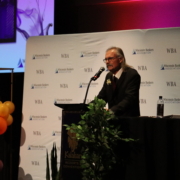
Corey Chambas (center) accepts his award from WBA President and CEO Rose Oswald Poels and 2024 Banker of the Year Kenneth Thompson
With 32 years at First Business Bank, Chambas has led the organization through principled growth. Today, the organization is a $4 billion institution with five specialized lending divisions, private wealth services with $3.8 billion assets under management, and bank consulting services that help other financial institutions. Under his leadership, the organization has delivered extraordinary shareholder returns, strong profitability metrics, and consistent market leadership. This performance has earned First Business Financial Services industry recognition, including being named a five-time honoree of Piper Sandler’s Sm-All Stars, a distinction awarded to high-performing, publicly traded community banks.
Chambas is equally recognized for cultivating a people-first culture. His collaborative leadership style has resulted in First Business Bank being named a National Top Workplaces USA Award winner from 2022 through 2025. In 2025, the organization also achieved a Net Promoter Score of 78, placing it among the top performers in the financial services industry.

Corey Chambas and colleagues
A respected industry voice, Chambas has shared insights on strategy, growth, and culture at leading forums including Second Curve Capital’s Financial Services CEO Retreat and Bank Director’s Acquire or Be Acquired Conference. Chambas was also recently recognized as BankBeat magazine’s Banker of the Year for 2026 and by BizTimes as one of Wisconsin’s 275 Most Influential Business Leaders statewide.
Chambas’ leadership extends into education, executive development, and civic engagement. He has presented to students at the Wisconsin School of Business as part of UW-Madison’s “Distinguished Entrepreneur” program, spoken to the FEI Madison Chapter on leadership and team dynamics, and facilitates Wisconsin Manufacturers & Commerce’s Executive Forum Milwaukee cohort, mentoring Wisconsin business leaders on strategy and executive leadership.

Corey Chambas accepting his 2025 Banker of the Year Award at the WBA Bank Executives Conference
His community leadership includes board service with United Way of Dane County, Madison Breakfast Rotary, and the Foundation for Dane County Transition Schools. Recognizing Dane County’s critical affordable housing shortage, Chambas championed First Business Bank’s $2 million investment in the Dane Workforce Housing Fund, helping support the creation of more than 747 affordable housing units. Beyond formal roles, Chambas has also participated in numerous initiatives that strengthen local schools and families. This hands-on approach to community building has created lasting impact while inspiring others to follow his example of generous service.
The Wisconsin Bankers Association’s Banker of the Year award is presented to one Wisconsin banker each year in recognition of outstanding service to their bank, to the continued vitality of their community, and to the banking profession. The Banker of the Year award began in 1986, and Chambas is the 40th banker honored with this distinction.
Kenneth Thompson; chairman of the board of Capitol Bank, Madison; honored by Wisconsin Bankers Association
The Wisconsin Bankers Association (WBA) is pleased to announce that Kenneth D. Thompson, executive chairman of the board of Capitol Bank, Madison, has been named the 2024 Banker of the Year. The award was presented the evening of February 6, 2025, in Milwaukee at the largest banking industry event in the state, the WBA Bank Executives Conference.
“It is an honor to congratulate Ken on earning the title of ‘Banker of the Year,’” said Rose Oswald Poels, WBA president and CEO. “He is widely admired not only for his professionalism and expertise, but also for his genuine kindness and deep commitment to his family, colleagues, and community.”

Kenneth Thompson (center) accepts his award from WBA President and CEO Rose Oswald Poels and WBA Chair Alvaro Araque
Thompson’s 29-year journey with Capitol Bank began in its early days as a de novo bank with under $10 million in assets. Since that time he has steered Capitol Bank to over $600 million. Under his guidance, Capitol Bank expanded its footprint, opening new branches and fueling loans to support the local economy.
Thompson’s influence extends far beyond his local community, shaping the banking industry at large. As a former chair and board member of the Wisconsin Bankers Association, he guided the organization through challenging times, including the pandemic years. His advocacy efforts in Washington, D.C., service on the WBA Government Relations Committee, and his testimony to policy makers on critical issues such as the prevention of elder financial abuse have left a lasting impact on the industry. Thompson’s support of financial literacy through the Wisconsin Bankers Foundation further underscores his commitment to empowering individuals and strengthening the financial wellness of Wisconsinites.
In his professional capacity, Thompson has been a driving force behind economic growth and innovation. As a member of the Federal Home Loan Bank Board, he has championed initiatives that promote housing finance and community investment. Thompson’s commitment to economic development extends to partnerships with organizations such as Madison Development Corporation, where his leadership has supported critical local projects. Under Thompson’s leadership, Capitol Bank received the ICBA Community Service Award for providing financial services to 12 senior living facilities which reflects his vision for fostering financial stability and access for all.
Thompson embodies the spirit of community service through his lifelong commitment to improving lives both inside and outside the banking world. His dedication shines brightly at Agrace, Wisconsin’s largest hospice care organization caring for over 1,000 patients per day, where he has been involved as a volunteer since 1997 and chaired their annual charity golf outing numerous years before joining the Agrace board in 2007 to the present as chair. His leadership earned him the prestigious Life Member Award. Additionally, Thompson has been a cornerstone of several local organizations, from his work on the Catholic Charities of Madison Board to his role as a founding member of the American Family Children’s Hospital Community Advisory Board. For nearly 40 years, Thompson has been an active member of the Breakfast Optimist Club of Madison, where he has served as president and provided valuable economic updates.
Thompson has also volunteered for a number of local non-profits during his tenure with the bank and has been a passionate leader who encourages others to get involved. During his time as president and CEO of Capitol Bank, he advocated for his team to give resources of time and expertise to local non-profits. Current team members proudly sit on over 60 boards and committees (with a team of less than 60 people). Ken is also a United Way Tocqueville Society Member, an esteemed level of donor recognition that United Way provides.
The Wisconsin Bankers Association’s Banker of the Year award is presented to one Wisconsin banker each year in recognition of outstanding service to their bank, to the continued vitality of their community, and to the banking profession. The Banker of the Year award began in 1986, and Thompson is the 39th banker honored with this distinction.
By Chanel M. Schmidt, vice president – branch manager, Port Washington State Bank, BOLT Section Board Member

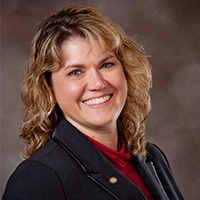
Chanel M. Schmidt
I have been a part of the banking community for almost 30 years, it has been a journey working at many different financial institutions, doing various roles. One thing I learned is that banking is my passion, and I am extremely proud of all that I have accomplished. Today, I would like to share my story of being a professional in the banking industry, and the role that Building Our Leaders of Tomorrow (BOLT) through the Wisconsin Bankers Association (WBA), has played a part in my success.
When I started as a banker, my vision was unclear. I was only 16 after all. I had ideas of being a nurse and attending nursing school, or even a teacher. I did eventually attend tech school to complete the early childhood education program. This was useful when I started a family and ran an in home day care. It was rewarding to be home with my family, care for others children and even teach them a little something, seeing their growth and development was truly inspiring and motivated me to want more.
Banking was always easy for me, I was a quick learner and throughout my journey I could always pick right up where I left of. I have been back in banking for just over 10 years. I never imagined wanting to be a leader; that was too terrifying, title was not something that mattered to me and still does not today. My main purpose and goal was to work hard, take care of our customers, and make a difference. This still holds true to today, the only thing that has changed is that I want to make banking better, and I want to impact and inspire others to do the same.
Throughout all of my opportunities the consistent driver was a mentor that believed in me and saw my potential. As I became more confident my vision became clear that this could be more of a career than just a job. About 6 years ago, I was encouraged to train and develop our team members in our retail department, this also seemed terrifying (the word leader came to mind), but I remembered how much I loved to teach and see individual growth and development of an individual. Once I started our training program, I was able to attend my first BOLT summit. The idea was to get together with peers in our industry, and get insightful material to grow our program. I can tell you at first I felt like I was not valuable enough to be there, and boy was I wrong. When you step in a room at a BOLT summit you are meeting and networking with bankers in all roles of our industry. After that first summit, I wanted more. I wanted to be better, I wanted to make a difference to my financial institution. I needed to work hard, and set my goals for my next chapter. I needed to become a leader to help grow and develop others in our corporation.
BOLT has enabled me to build a growth mindset that intelligence can be developed and I had the potential to be a leader. With that mindset it has brought encouragement to take on more challenges and really put me outside of my comfort zone. BOLT has helped me to make an impact in other ways through volunteerism, leadership, training and development facilitating, and the scariest of all; public speaking.
Every experience has taken me past the limits I have set for myself, it has challenged me to grow. The opportunities my company has provided for me to continue my education, attend networking opportunities, attend BOLT summits and join a WBA section board has been career changing. I have learned that leadership isn’t as scary as it seems, everyone can be a leader because the title is not what makes you a leader, it’s how you show up and lead.
By Nicholas Felder
As agricultural lenders in Wisconsin, we all play a crucial role in supporting the backbone of our state’s economy. Agriculture is not just a primary contributor; it is a way of life, deeply rooted in tradition yet constantly evolving to keep up with opportunities and threats.
As we all know Wisconsin’s agricultural sector is diverse, ranging from dairy farming to crop production to cattle and poultry and beyond. The state of Wisconsin is heralded for its dairy industry, leading the nation in cheese production and near the top in milk production. Additionally, Wisconsin farmers grow a variety of crops including corn, soybeans, cranberries, vegetables like potatoes and green beans, contributing significantly to the state’s economy.
However, like many agricultural regions across the country, farmers in Wisconsin have encountered numerous challenges in recent years. Fluctuating commodity prices, adverse weather conditions, increasing input and equipment costs, and regulatory pressures have strained cash flows for many operations. These challenges, compounded by global market dynamics and shift in consumer preferences, underscores the need for adaptive financial strategies and robust support from agricultural lenders.
As we navigate through 2024, uncertainty over the political landscape will be a point of discussion and possible contention around many dinner tables as we steam ahead into the fall Presidential election. This also includes discussion around the expired farm bill. The farm bill, typically renewed every five years to provide some stability and support to farmers across the country, is a cornerstone of U.S. agricultural policy. However, the expiration of the 2018 farm bill has left the agricultural community in limbo as we await congressional collaboration to pass a new bill or extend existing provisions.
This farm bill has, and will likely again, include provisions of: Income Support Programs, Conservation and Environmental Programs, Rural Development and Infrastructure; and Trade and Export Promotion. All of these provide support and opportunities for Wisconsin producers and rural economies to grow food, fiber, and fuel at affordable prices which are used locally, nationally, or exported for distribution worldwide.
In its absence, agricultural lenders here in Wisconsin should proactively engage with clients to assess risk exposure and explore strategies to mitigate market volatility. This should lead to conversations about cash flow management and repayment capabilities. We should be informed and ready to utilize the buffet of lending and treasury management options to put our producers in the best position to succeed as possible. We also need to stay informed of developments in the farm bill process and guide producers to resources as well as advocate for policies that support the long-term viability of agriculture in Wisconsin. Please engage with the WBA, local policymakers, and community leaders including engaged customers to voice concerns and influence policy outcomes.
Your role in navigating uncertainty is pivotal in supporting the resilience and prosperity of our farming communities. By staying informed, proactive, and adaptive in your approach to your clients can assist in mitigating risk, allow for capturing of opportunities, and foster sustainable growth amidst a historically challenging environment. As always, while the path forward may be uncertain, your commitment to serving the needs of Wisconsin producers and communities remains steadfast. Together, we can weather the storm and continue to uphold the legacy of agricultural excellence in our state.
Felder is vice president – commercial and agricultural banking at MidWestOne Bank in Lancaster. Felder also serves as Vice Chair on the 2024–2025 WBA Agricultural Bankers Section Board of Directors.

Ryan Boebel
By Hannah Flanders
Ryan Boebel’s interest in community banking started at a young age. From cashing his change at the local bank to serving as a member of its Executive Management Team, Boebel credits much of his passion and success within the banking industry to opportunities provided to him by Community First Bank.
“I’ve always had such a positive perspective of the banking industry, largely in part because I have witnessed the impact that my local bank has had within my community,” notes Boebel. “Even from an early age, I could see how important banks, specifically locally owned community banks, were. The connection to its communities and culture within Community First Bank has further fueled my passion to becoming further involved in the industry.”
Boebel learned of career opportunities available at Community First Bank and began his banking career in 2011 as a high school intern and teller. Following high school, Boebel went on to pursue his associate degree at UW–Richland, his bachelor’s degree in business administration – finance at UW–Whitewater, and an MBA at UW–Parkside. All the while, Boebel was quickly advancing through the ranks, gaining experience in loan processing, credit underwriting, and lending.
Boebel began participating in the Wisconsin Bankers Association’s BOLT (Building Our Leaders of Tomorrow) program in 2017 upon a recommendation from his bank’s management. Bringing together hundreds of bankers annually, BOLT’s Leadership Summits provide a non-competitive environment for bankers to gain an introduction to advocacy, explore leadership development and educational growth opportunities, and focus on the importance of networking. Having been a BOLT member for over seven years, Boebel cites the open dialogue between members and valuable connections that he has made with peers as among the greatest benefits of his involvement.
“BOLT is a wonderful opportunity to provide further growth for professionals in our industry — regardless of the position, tenure, or title within the bank,” emphasizes Boebel. “The success that one may have in a career is largely impacted by what is learned on the job, but more importantly, what one is willing to learn from others.”
In January 2024, Boebel was promoted to Senior Vice President and Chief Credit Officer at Community First Bank. From a management perspective, Boebel sees BOLT as an impactful way to develop professionals and to bring insight back to the bank.
“During sessions, I often see peers making notes and discussing ideas to bring back to their banks. Whether it is a powerful perspective shared by a speaker or a topic of conversation had with peers, BOLT really empowers individuals to structure and organize their thoughts so that they can bring insight and improvements back to their respective management teams and say, ‘We discussed this…this is how others are approaching this challenge…or have we/should we consider doing this.’”
As the incoming 2024–2025 BOLT Chair, Boebel is excited to share his passion for community banking, empower the current and upcoming generation of leaders in the industry, and represent over 500 BOLT members. Especially as it relates to advocacy — a significant pillar of the program — Boebel is focused on helping more bankers become further engaged and contribute to the long-standing success of the industry.
“I was initially hesitant to become involved in advocacy efforts, and I probably never would have become involved with the important work if not for BOLT,” Boebel admits. “Advocating for the industry and communicating the challenges that our industry faces to our elected representation is vital to our longevity as individual organizations and as an industry. Once you invest the time to listen, research, and understand the issues that are impacting the industry and your bank, it becomes more comfortable communicating with delegation and advocating for the banking industry. You come to realize it isn’t as uncomfortable as it may first appear; BOLT helps develop these perspectives through educating members.”
For many, BOLT provides the first opportunity for bankers to understand the importance of, and gain experience in, advocacy at both the state and federal level. With legislation and regulatory changes constantly impacting the banking industry, Boebel sees advocacy as a crucial tool for ensuring that the voices of bankers — especially those emerging into leadership positions — are heard and considered in the decision-making process.
From networking to advocacy, BOLT provides a comprehensive program for bankers to develop their skills, expand their knowledge, and contribute to the advancement of Wisconsin’s banking industry. With the next BOLT Leadership Summit just around the corner, a date range June 13–14, 2024, all banks are invited to identify their emerging leaders and encourage attendance at this summer’s event. Visit wisbank.com/Summit to register yourself and your team.
By Rose Oswald Poels
Announced earlier this month during the annual Bank Executives Conference, the Wisconsin Bankers Association has launched our newest opportunity for emerging bank leaders — the BOLT (Building Our Leaders of Tomorrow) Leadership Academy. Having long prioritized professional development to ensure that members stay at the forefront of industry trends and best practices as they move through their career, the Association is excited to expand upon this commitment to present a formalized leadership program designed specifically for your bank’s highly motivated emerging leaders.
Each year, thousands of bankers utilize the Association — whether for participating in educational programs or leveraging resources — to foster their professional development and enhance their contributions to the industry. For over a decade, WBA’s BOLT Program has propelled countless bankers across the state into leadership positions. In establishing a comprehensive and structured approach to leadership development as part of the BOLT Leadership Academy, the Association looks forward to continuing our legacy of shaping the aspiring leaders of Wisconsin’s banking industry for generations to come.
The BOLT Leadership Academy takes the success of WBA’s well-established BOLT Program one step further through an all-encompassing and targeted experience for a cohort of 20 to 25 bankers. This structured approach aims to empower participants with the skills and broad knowledge necessary to successfully navigate the complexities of being a leader in the banking industry.
Throughout the 15-month program, bankers will take part in a number of in-person and virtual events — many of which have been developed exclusively for the Academy participants — to facilitate long-lasting connections and hone essential leadership competencies, including strategic management, risk assessment, and communication. The curriculum for the BOLT Leadership Academy extends the BOLT mission to assist members in advancing as leaders all while making the most of the small group setting.
WBA is now accepting applications from aspiring banking leaders who are interested in developing their skills to advance their career in our industry. With limited space available, please encourage your bank’s emerging leaders to complete the application before Friday, March 22, 2024.
By Rose Oswald Poels
For generations, banking leaders across the state have made significant strides in ensuring the economic wellbeing of our communities and helping shape our industry into what we know today. To recognize the current and former bankers who have demonstrated excellence in banking, community service, and civic involvement, the Wall of Excellence was established by the Wisconsin Bankers Association in 2020.
Now in its fifth year of honoring Wisconsin’s most prominent bank leaders, the Wall of Excellence currently profiles the faces and stories of 28 Wisconsin bankers — some of whom were recognized posthumously — for their commitment to our industry and demonstration of the highest standards of ethics, professionalism, and enthusiastic service. Permanent plaques commending these individuals and families are on display in the WBA Engagement Center in Madison and are seen by thousands of bankers who visit our headquarters annually for a variety of meetings and training programs. An in-person ceremony, featuring speakers from the Wisconsin Department of Financial Institutions (DFI) and a member of Congress, will be held in September at the WBA Office to celebrate the Class of 2024 Leaders in Banking Excellence.
Joining the WBA Leaders in Banking Excellence is the Association’s most esteemed honor, and nominations to join as part of the Class of 2024 are being accepted now through Friday, May 10, 2024. Nominators will honor their approved banker(s) by making a $10,000 contribution for an individual or family to the Wisconsin Bankers Association (may be tax-deductible as a business expense) or Wisconsin Bankers Foundation (may be tax-deductible as a charitable contribution).
It is truly a privilege to work alongside you and stand witness to the individual and collective contributions many have made to our industry. Thank you for considering this invitation to nominate yourself or another to join our Class of 2024 Leaders in Banking Excellence at wisbank.com/Excellence. Please do not hesitate to contact me with any questions.
Initiatives in eastern Wisconsin help to provide workforce housing
By Hannah Flanders
In July 2023, Governor Tony Evers signed into law Wisconsin’s largest ever investment into affordable housing. The historic $525 million investment helps to bolster the state’s affordable housing initiatives and establish loan programs that aid builders and developers to expand infrastructure, spur new construction, and prompt existing home improvements.
Already, bankers across the state are committed to fostering strong communities. With Wisconsin’s recent legislation, opportunities to support unique initiatives and help ensure equitable access to housing have only expanded. Housing supply and affordability have long been a concern across the state. While rental prices and the median cost of homes steadily rise, inventory continues to be a major issue. Throughout Q3 2023, Wisconsin hovered around only 7,600 active listings. As individuals and families in Wisconsin struggle to afford what limited property is available, many — including bankers — are concerned about the impact the housing market will have on Wisconsin’s workforce.
Supporting Housing Initiatives
In a report published by Forward Analytics in September 2022, it is estimated that 130,000 individuals representing the state’s working population will leave Wisconsin by 2030. Aiding in expanding affordable housing programs across Wisconsin is not only a significant way for banks to demonstrate their commitment to their communities; banks play a critical role in stabilizing communities, attracting and retaining talent, fostering economic growth, and helping local families to begin building their generational wealth.
Workforce housing, as defined by the Wisconsin Legislative Council, is housing that requires households to spend no more than 30% of 140% of the local area’s median income. These homes are intended for individuals or families whose household earnings do not surpass 140% of the area’s median income.
Already, several banks — including Cleveland State Bank, Collins State Bank, Oostburg State Bank, and Waldo State Bank — have partnered with the Sheboygan County Economic Development Corporation (SCEDC) to aid in actualizing the Forward Fund, a three-phase workforce housing project aiming to establish 600 entry-level homes in the county.
The Forward Fund was initially a $10 million investment in workforce housing spearheaded by Johnsonville LLC, Kohler Co., Masters Gallery Foods Inc., Sargento Foods Inc., and Sheboygan County. Working alongside the partnering Wisconsin-chartered banks in the area, developers are ensuring its future residents are able to access mortgages and loans that allow families to take the first step toward owning a home in Sheboygan County.
“It was in the best interest of our communities that we worked together,” notes Ben Becker, president of Collins State Bank, on the collaboration with Cleveland State Bank, Oostburg State Bank, and Waldo State Bank. “When people spend less on housing, they have more disposable income to spend on other goods and services, which can stimulate the local economies. When our community benefits, we benefit.”
With construction underway, the first project — Founders’ Pointe in Sheboygan Falls — is expected to be completed by the end of 2024 and feature 54 single-family units available for under $250,000.
“Upon completion of the project, there will be opportunities for permanent financing, and other financial institutions could get involved,” says Becker. “Several other communities are currently exploring similar projects for affordable housing, which will create additional opportunities for involvement throughout Wisconsin.”
In Washington County, leaders, employers, and workers have also expressed concern over the state of the county’s quality and stock of houses. As such, the Washington County Community Development Department established the Next Generation Housing Initiative in 2021.
With a mission to bring 1,000 new owner-occupied housing units under $420,000 by 2032, the initiative has already broken ground on two pilot developments — The Oaks of Jackson subdivision and lots 67–73 in the Skyway Park subdivision (Hartford). Between the two developments, the initiative will make 108 single- and mixed-family homes available to area residents.
Brian Heckendorf, senior vice president – director of community banking at Westbury Bank and village president of Jackson, Wisconsin, has a hand in the project not just from a banking standpoint, but as a community leader as well.
“I see this development helping various demographics from first-time homebuyers all the way to empty nesters that are looking to downsize,” Heckendorf notes. “This housing initiative will also help our local businesses fill their staffing needs better by keeping more people working and living in Washington County.”
Through Westbury Bank’s involvement in the program, several bankers helped to provide expertise as the County worked to establish guidelines for the initiative. “Working alongside a team of realtors, lenders, title companies, attorneys, and Washington County employees, our goal is to ensure that new homeowners looking to buy are able to obtain conventional loans,” adds Heckendorf.
In addition to the Forward Fund and Next Generation Housing Initiative, the Northeastern Wisconsin Housing Community Development Block Grant (CDBG) Loan Program helps to address the affordable housing as well as community and economic development needs of non-urban areas of Brown, Calumet, Door, Fond du Lac, Kewaunee, Manitowoc, Marinette, Outagamie, Sheboygan, and Winnebago counties.
Since 2014, the state CDBG-funded program has been administered by Brown County in order to provide 0% deferred loan payment housing rehabilitation loans to low- and moderate- income (LMI) owner-occupied households and small-scale neighborhood-oriented public facilities improvements, among other activities, to residents. Larger cities, including Appleton, Fond du Lac, and Sheboygan, receive CDBG funds directly from the U.S. Department of Housing and Urban Development (HUD).
Housing Provisions
While several preexisting initiatives continue to make investments in affordable housing across the state, Wisconsin’s 2023–2025 state budget also included several supplemental items in support of local workers, families, and communities that are predicted to make a historic impact across the state.
In the spring of 2023, the Workforce Housing Package was first introduced by Assembly Housing Chair Robert Brooks (R–Saukville) and Senate Housing Chair Romaine Quinn (R–Cameron) after a year of discussions between a coalition made up of the League of Wisconsin Municipalities, Wisconsin Builders Association, Wisconsin Counties Association, Wisconsin Housing and Economic Development Authority (WHEDA), Wisconsin REALTORS® Association, and Wisconsin Towns Association. The package garnered bipartisan support in both the State Assembly and Senate before being signed into law. The programs then received funding as part of the 2023– 2025 state budget.
“With this package, the coalition was most concerned with spurring the development of workforce housing,” notes Brad Boycks, executive director of the Wisconsin Builders Association. “The first step in making housing in Wisconsin more accessible is providing developers with the resources to both build and remodel single- and multifamily homes.”
The 2023 Wisconsin Housing Package encompasses the following five laws:
- Act 14: Residential Housing Infrastructure Loan Fund
Creates a residential housing infrastructure revolving loan fund and loan fund program. Both programs are administered by WHEDA and awarded to developers for the purpose of workforce or senior housing. Loans may also be awarded to the governmental unit having jurisdiction over the development.
- Act 15: Main Street Housing Rehabilitation Loan Fund
Creates a main street housing rehabilitation revolving loan fund and loan fund program. Both programs are administered by WHEDA and awarded to the owner of single-family or multifamily rental housing for the purpose of housing rehabilitation.
- Act 16: Local Regulation of Property Development
Addresses the judicial review of local residential development decisions; approval of permits for residential housing developments; the procedure for amending a zoning ordinance; appeal of county conditional use permit decisions; and planned development district zoning.
- Act 17: Workforce Housing Rehabilitation Loan Program
Modifies certain parameters of the workforce housing rehabilitation loan program to expand upon the specifics — including type of rehabilitation and type of home — that are eligible for a loan. Additionally, the Act allows WHEDA to establish an interest rate (at or below market rate) for a workforce housing rehabilitation loan.
- Act 18: Commercial-to-Housing Conversion Loan Fund
Creates a commercial-to-housing conversion revolving loan fund and loan fund program. Both programs are administered by WHEDA and awarded to the developer to cover construction costs for the conversion of a vacant commercial building to a new residential housing development that consists of workforce or senior housing.
For bankers, the 2023 Wisconsin Housing Package encourages banks to foster partnerships with WHEDA that significantly enhance the banks’ ability to assist customers in accessing these housing programs tailored to their specific needs. This collaboration not only helps banks to extend their traditional financial services by ensuring their customers are aware of the resources available to them, but bankers are also able to understand the nuances of each program and guide their customers effectively.
“While the loans provided by WHEDA are not meant to be the primary source of funding, it is important for bankers to know and understand what is included in the 2023 Housing Package in order to share the affordable opportunities with their customers,” notes Tom Larson, president and CEO of the Wisconsin REALTORS® Association. “By bridging financial gaps and offering support beyond conventional services, banks reinforce their dedication to the well-being of their customers and the communities they serve.”
Taking the Lead
As initiatives and opportunities for affordable housing emerge across the state, bankers have the unique opportunity to invest in their existing and future neighbors.
“In the last several years, many of us have experienced a very tight workforce environment while housing costs, whether renting or owning, continued to increase significantly,” says Becker. “Affordable housing directly contributes to the overall well-being and prosperity of a community, and we, as community bankers, have the opportunity and responsibility to support strategies that align with our mission to serve the needs of our communities.”